
The Last Thing
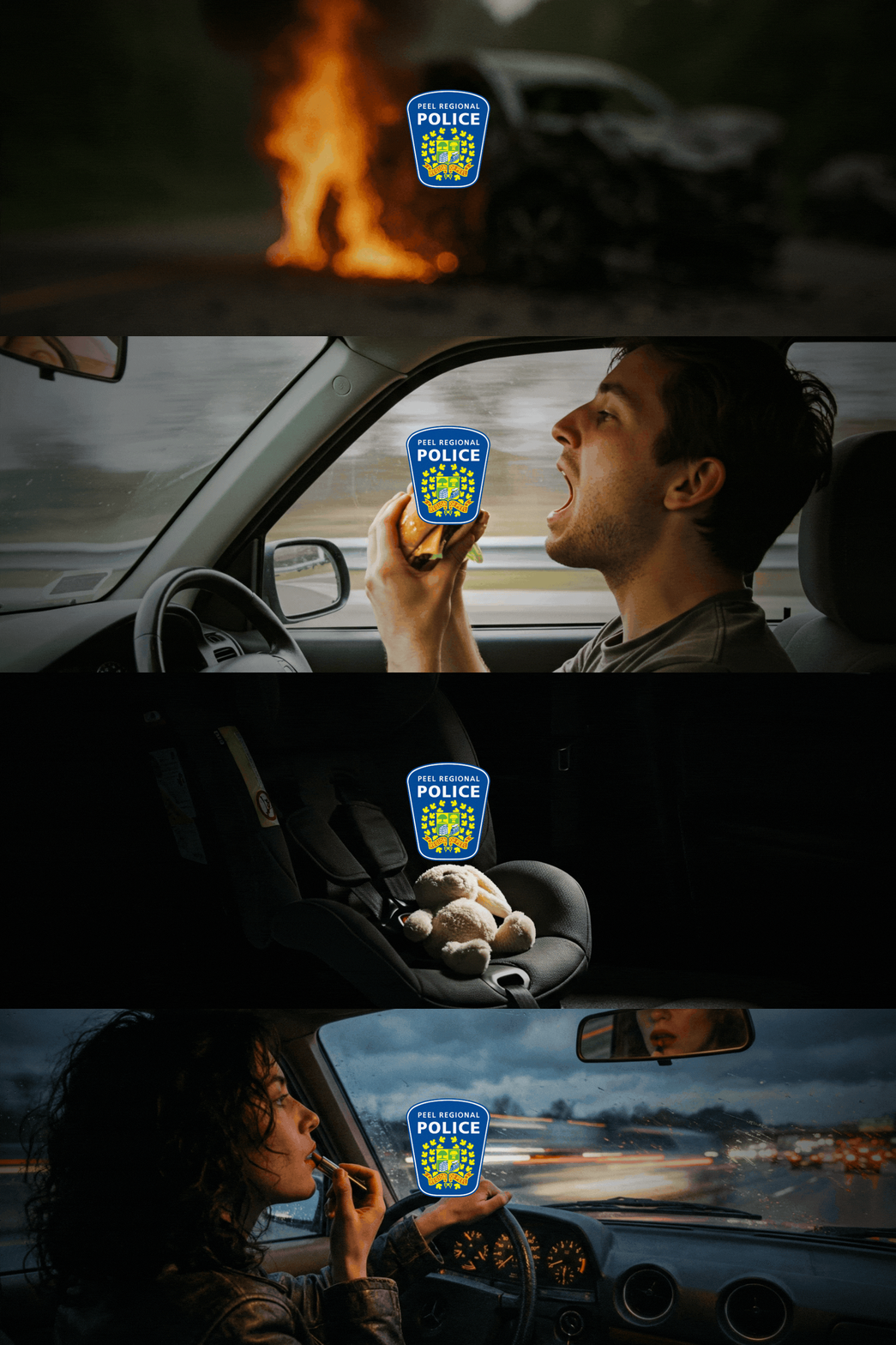
Peel Regional Police needed to combat rising distracted driving rates. The target audience (drivers 18–35) has become desensitized to standard "gore and shock" safety advertising. The goal is to break through apathy and force reconsideration of "small" risks taken behind the wheel daily.
The Challenge
Drivers suffer from an optimism bias, believing multitasking is safe and viewing texting, eating, or grooming as harmless habits rather than fatal errors. Traditional PSA imagery of blood and wreckage has become white noise; the audience looks away before the message lands. Visualizing consequences without relying solely on shock value was necessary.
The Spark
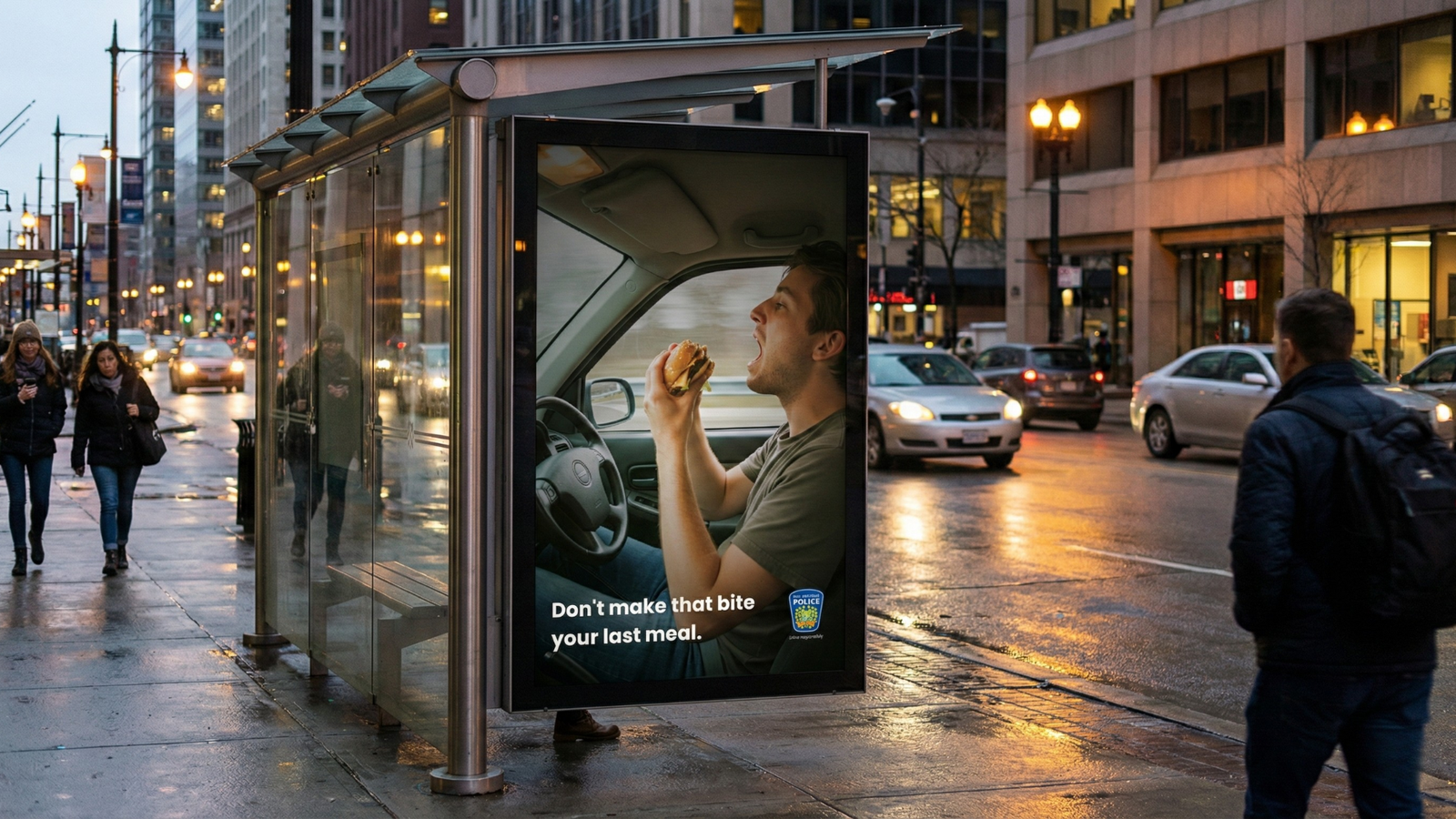
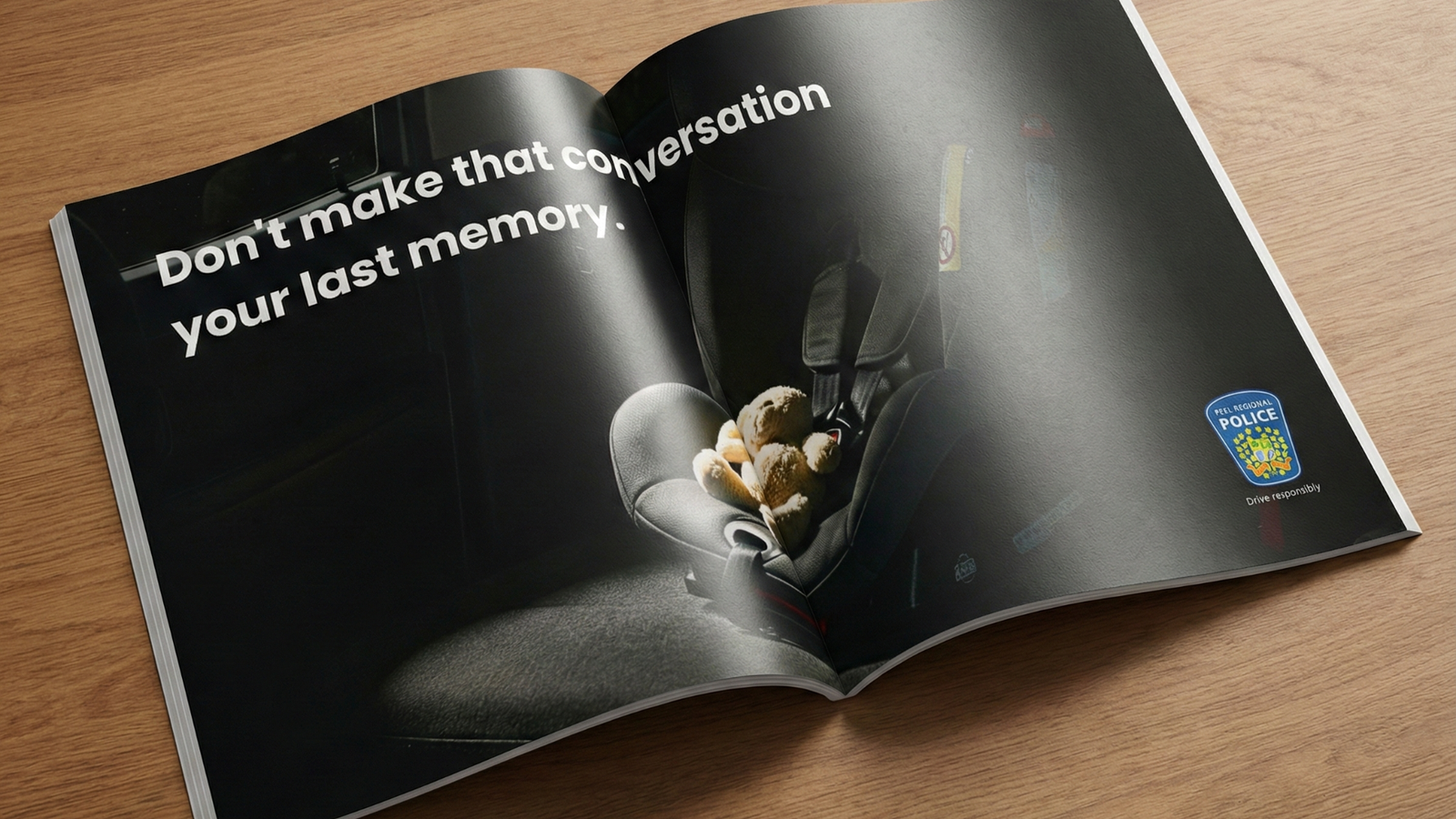
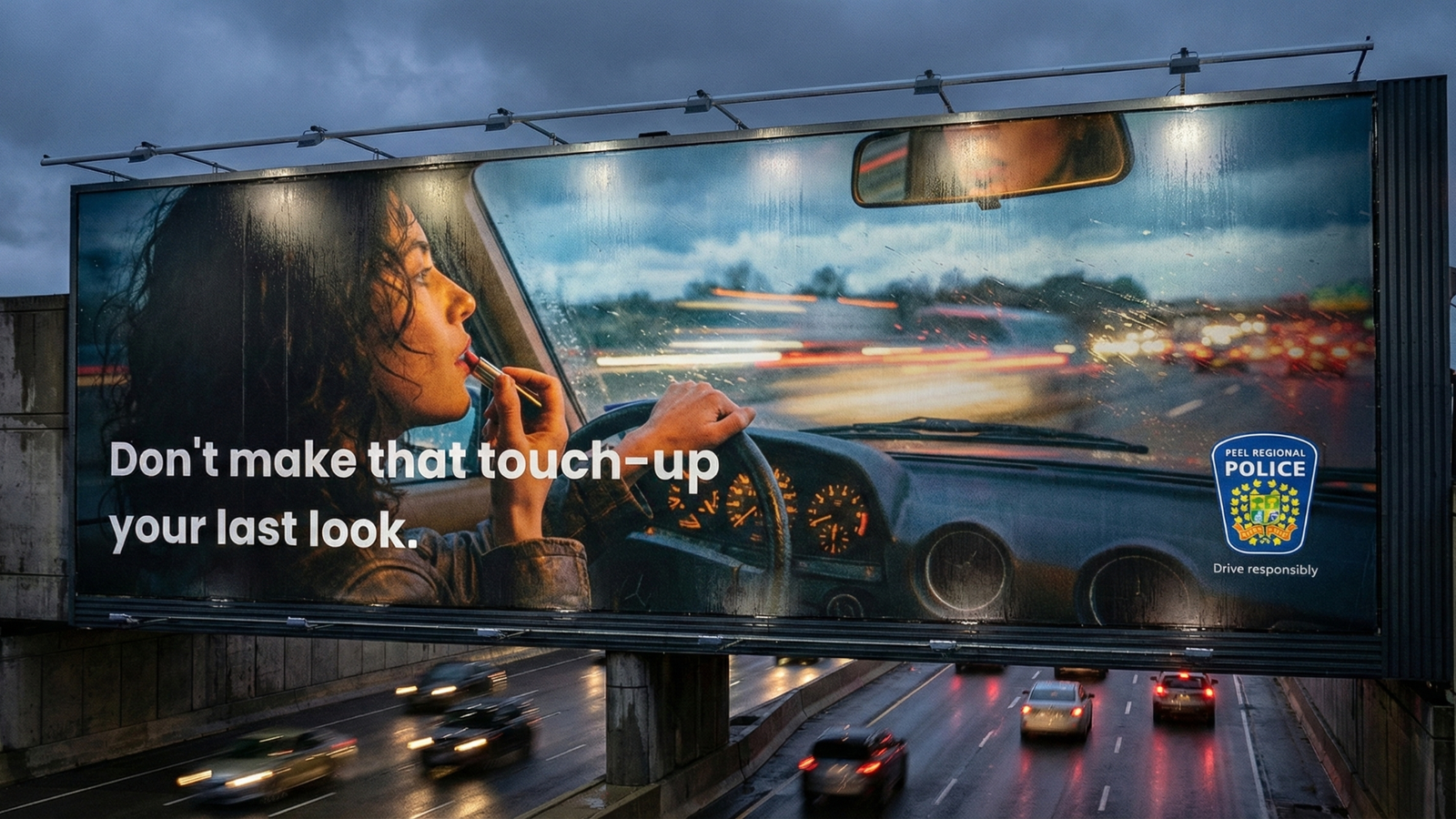
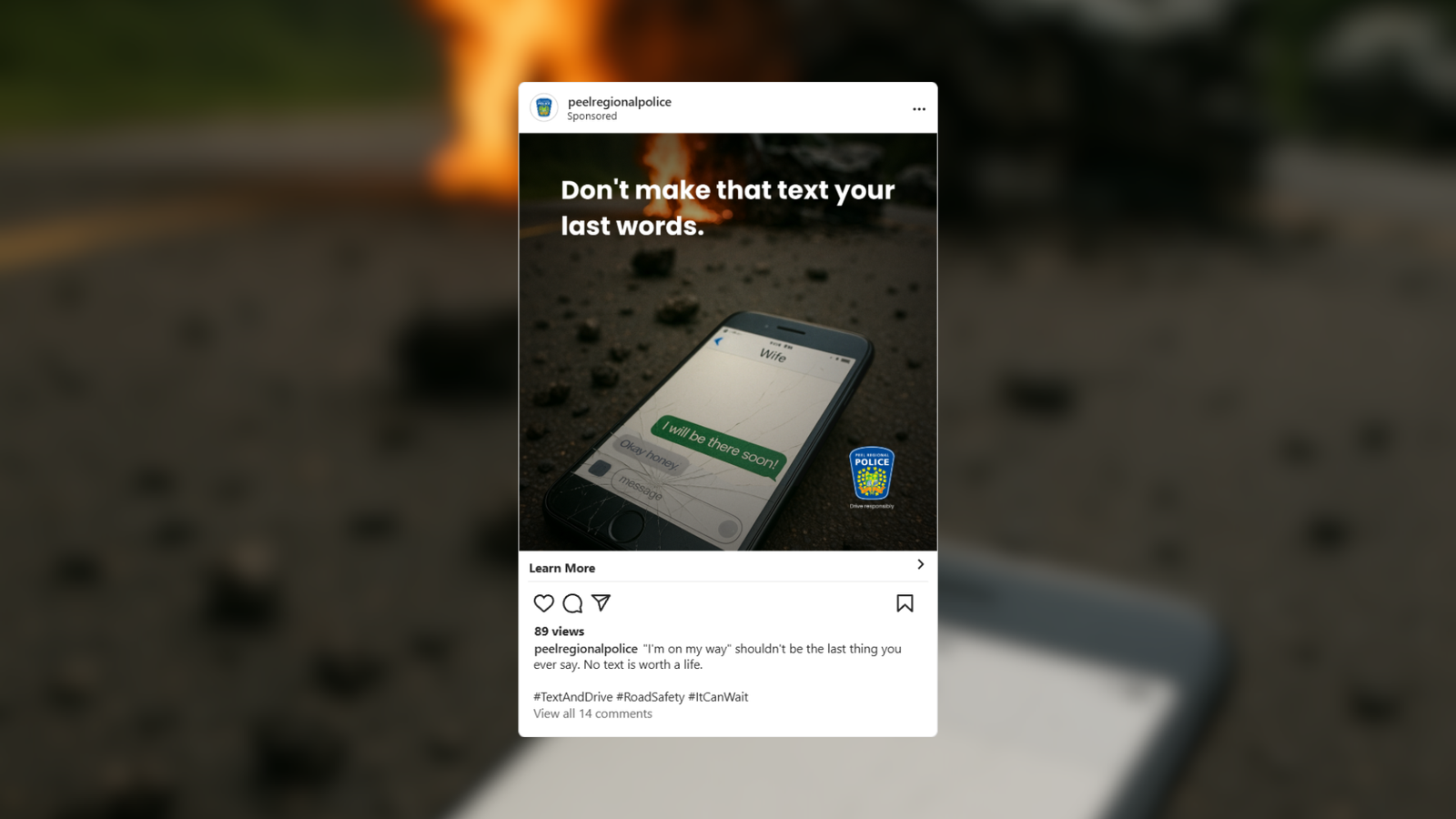
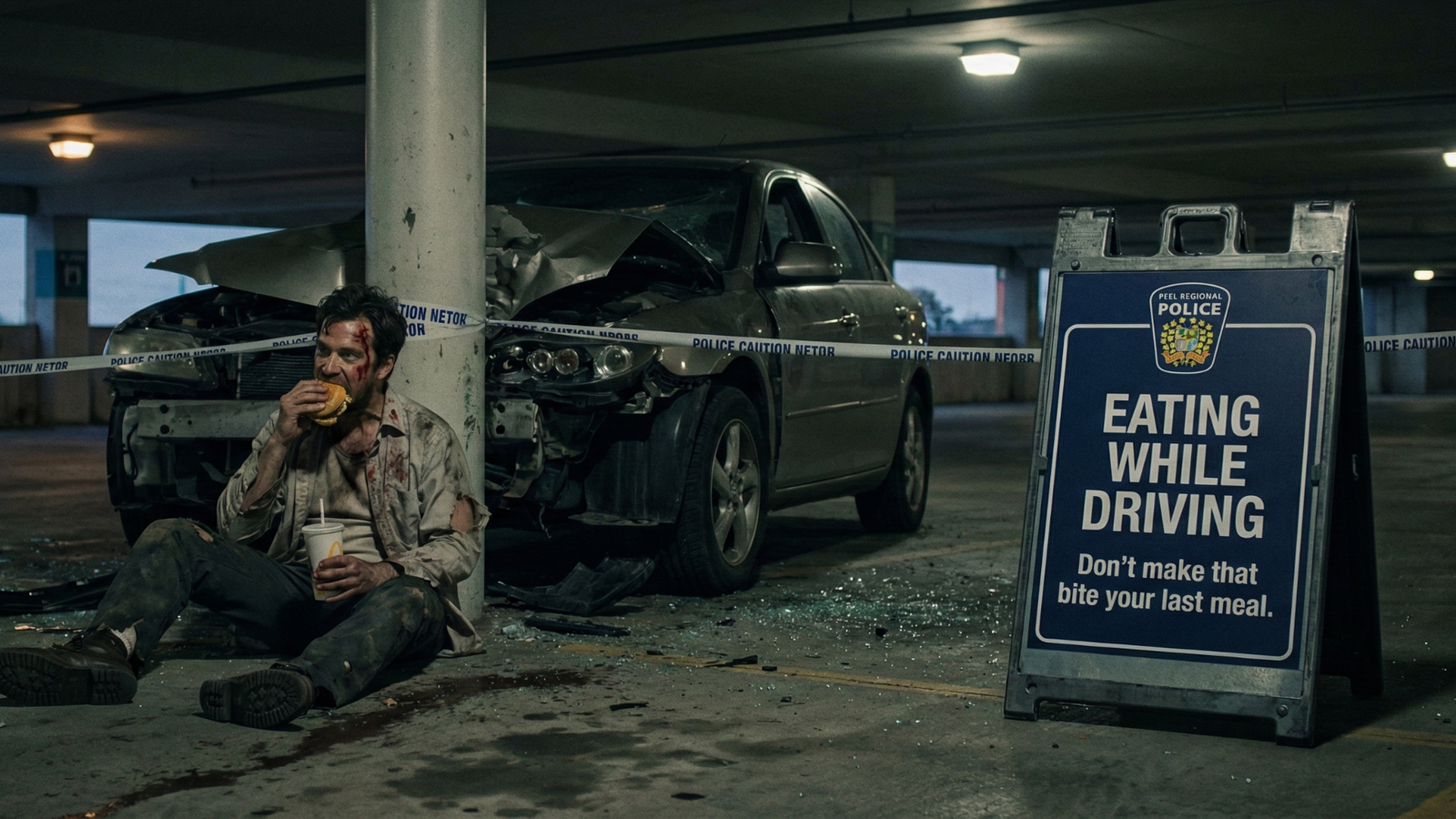
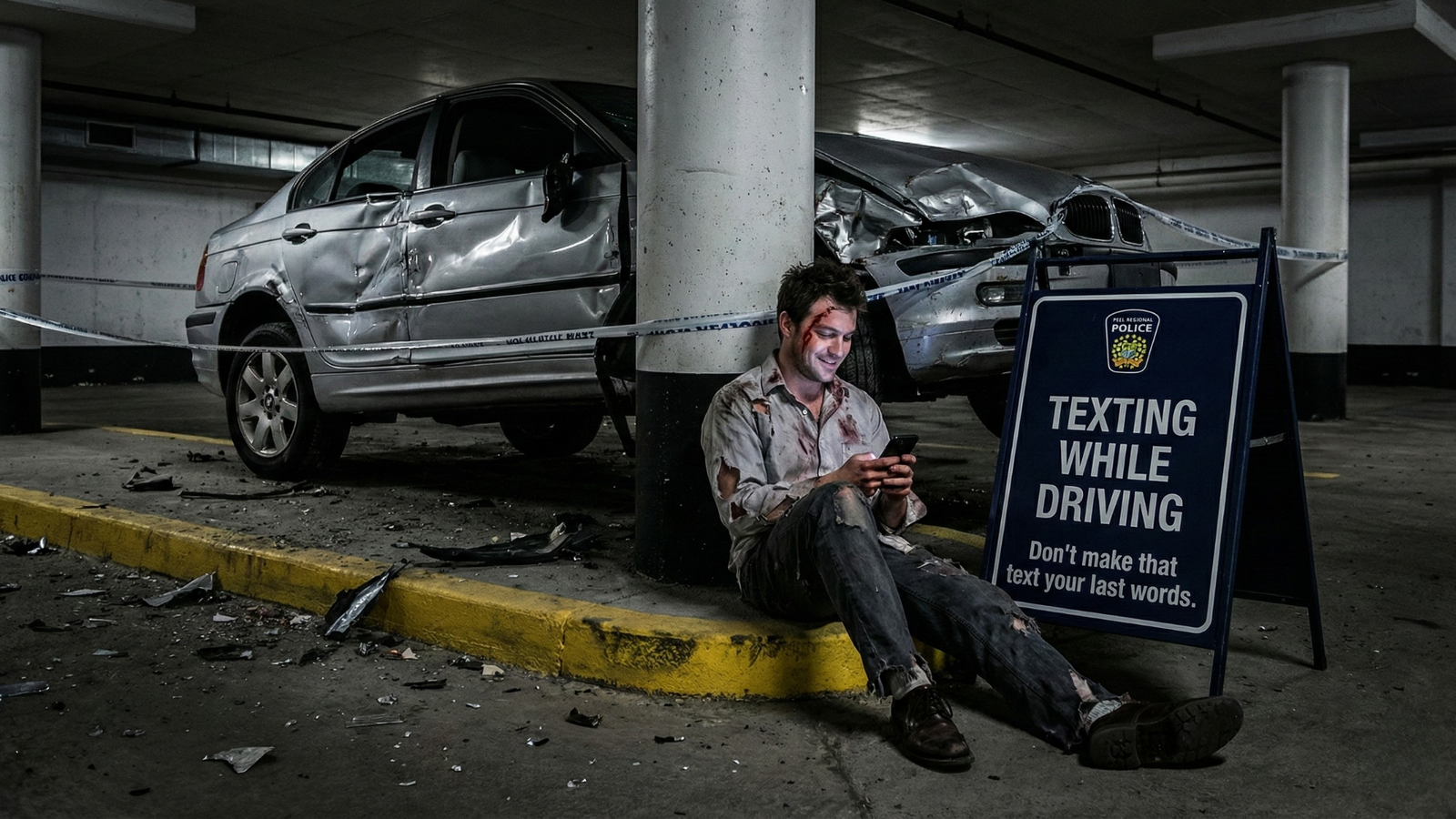
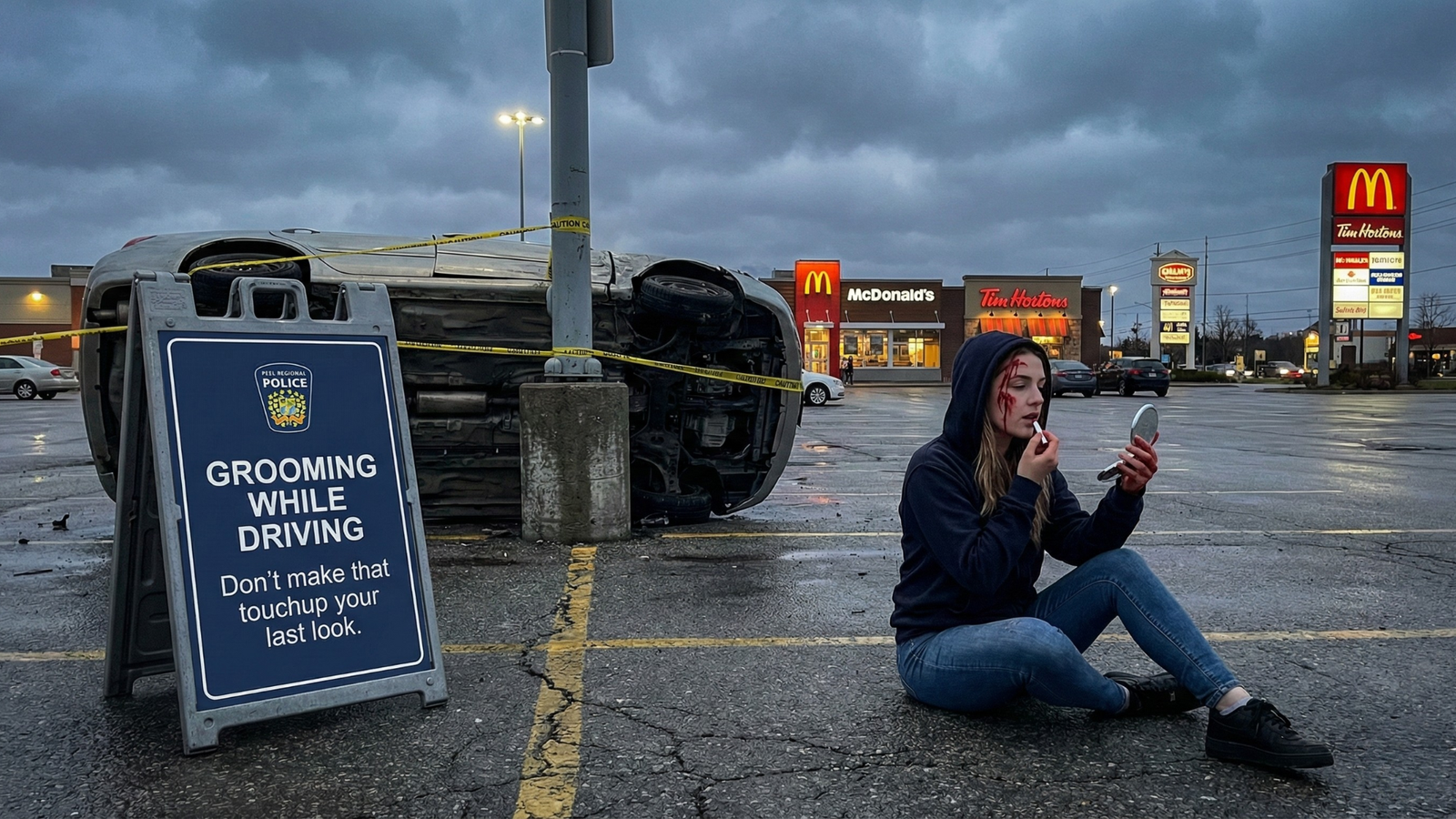
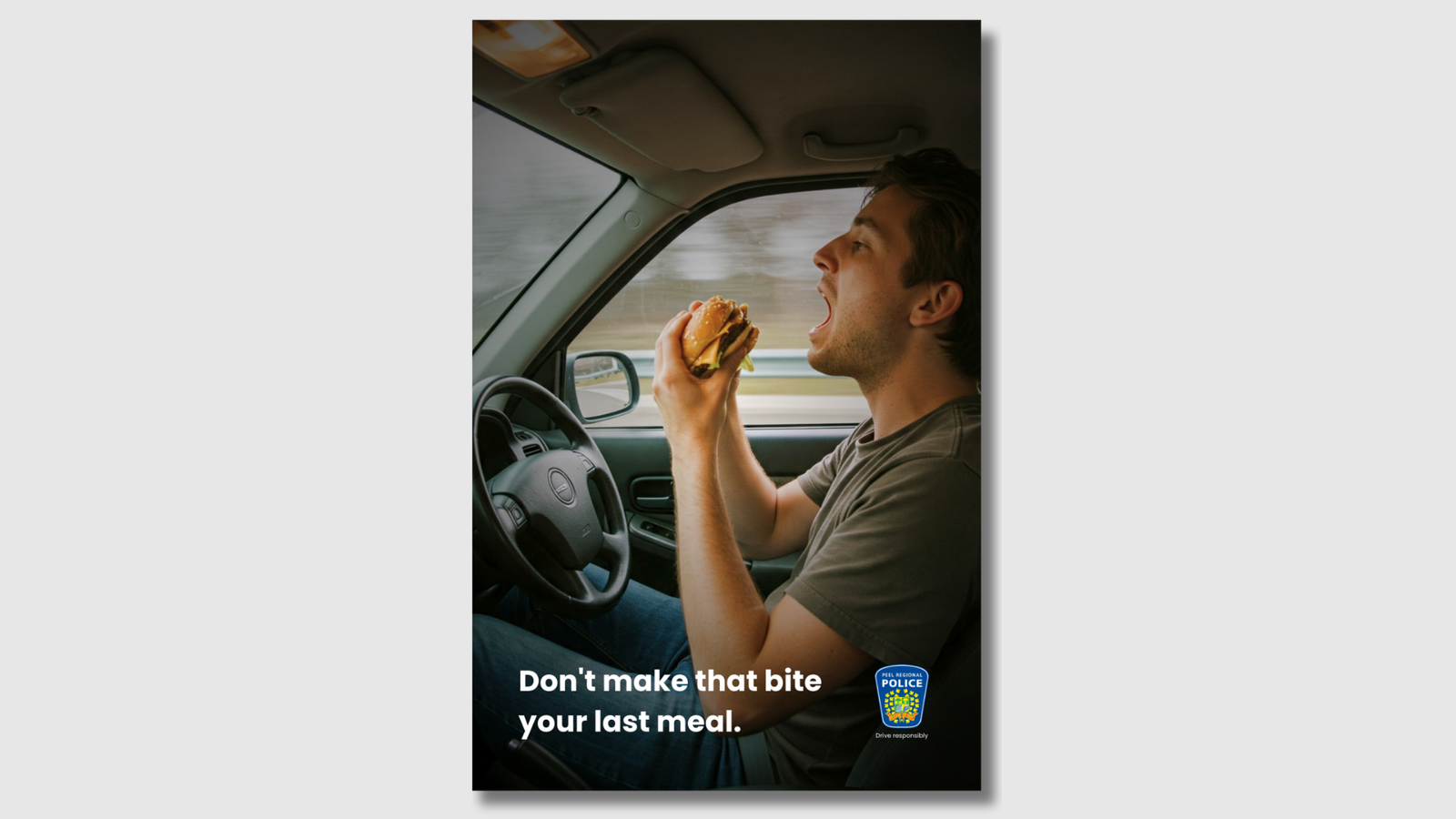
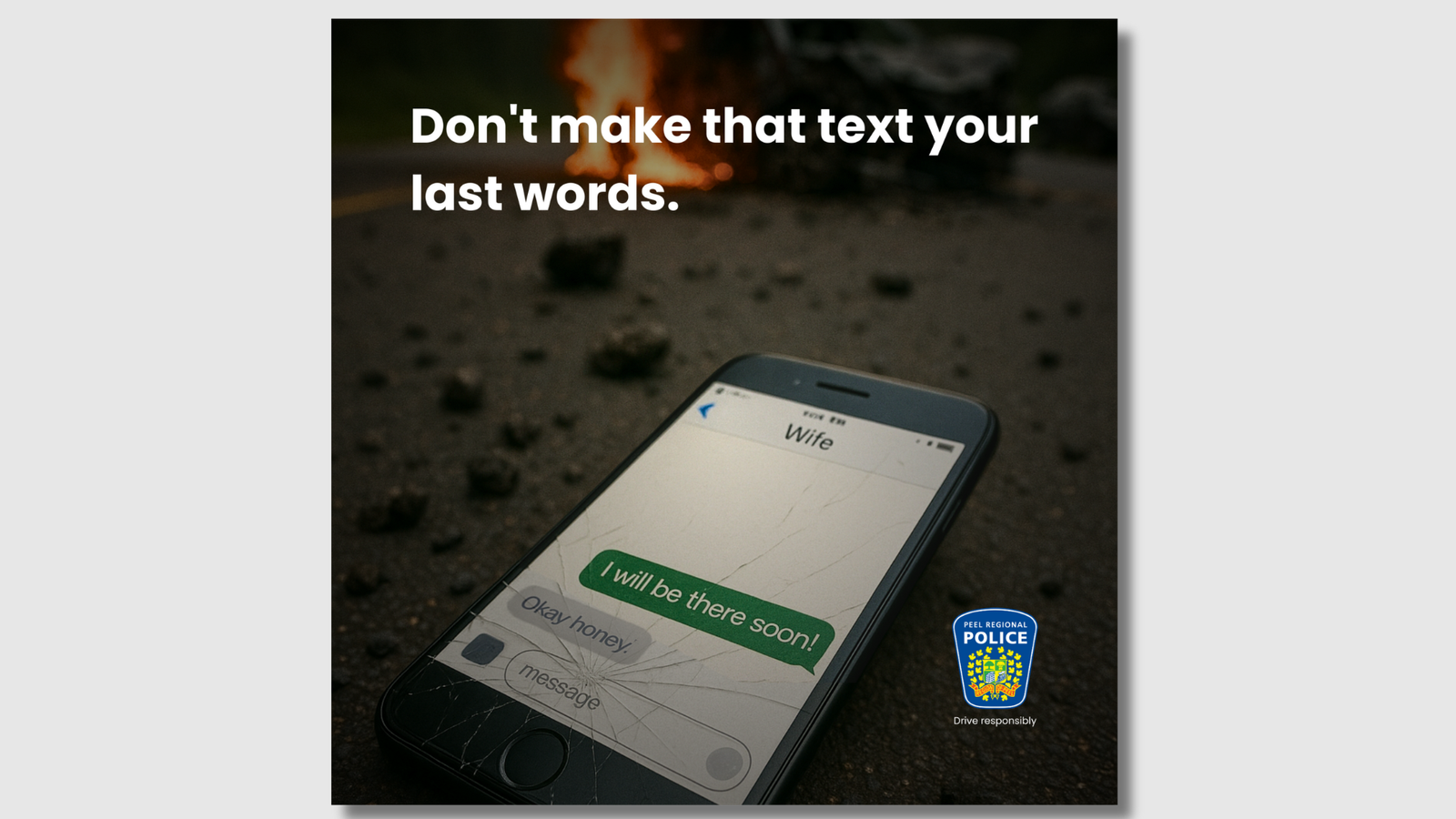
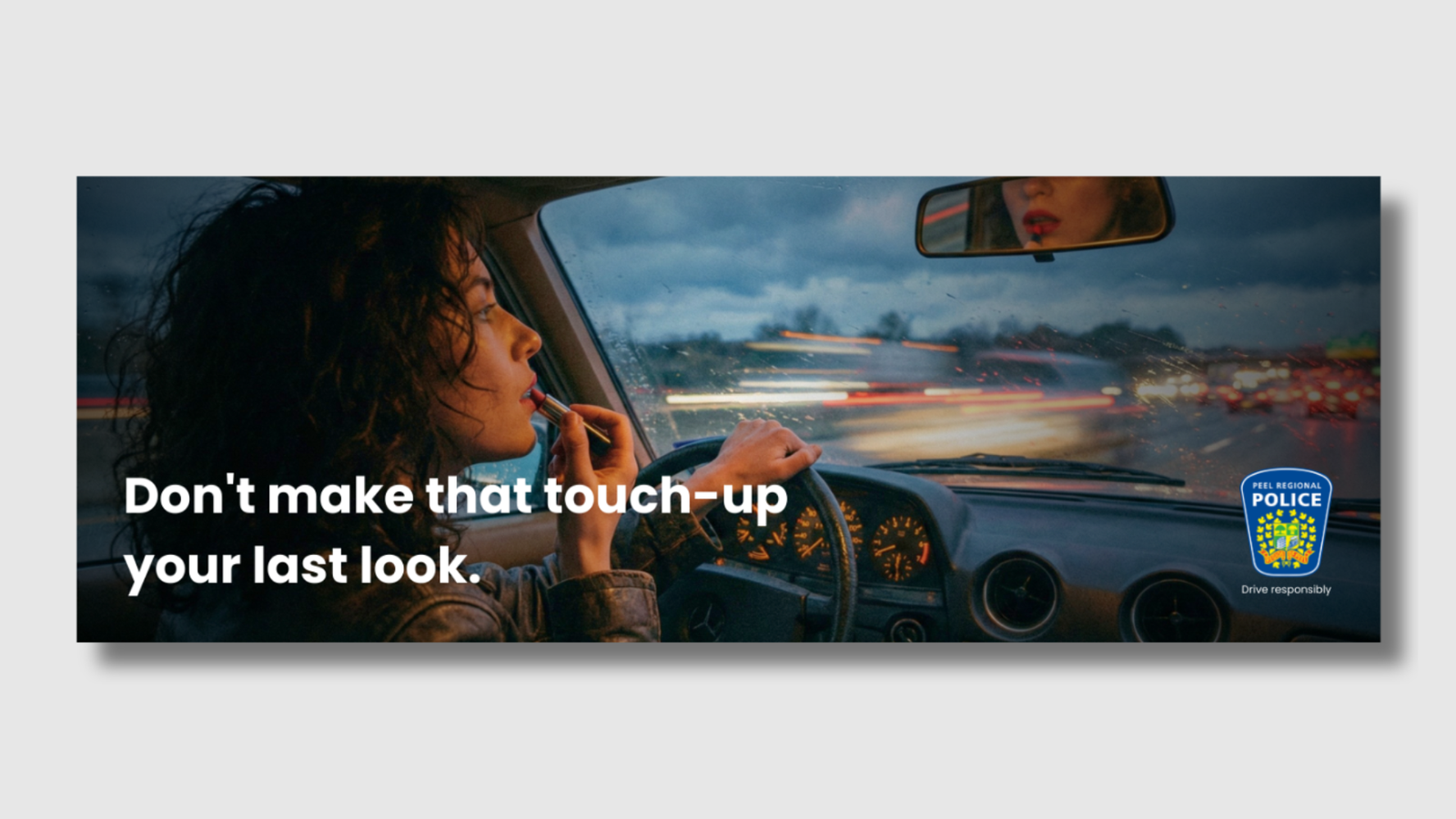
Deaths occur not because of villainy, but because of prioritizing the mundane over life. A text message, cheeseburger, or lipstick touch-up becomes the defining moment of death. The horror is not just the crash, it is the irony of an insignificant act becoming the final one.
The Big Idea
Shifting focus from the crash to the cause. Framing these small actions as "The Last Thing" turns everyday objects (a phone, a burger, a car seat) into symbols of finality. The campaign uses a rigid "Don't Make..." framework to force weighing the value of distraction against the value of life, turning a moment of convenience into a lifetime of regret.
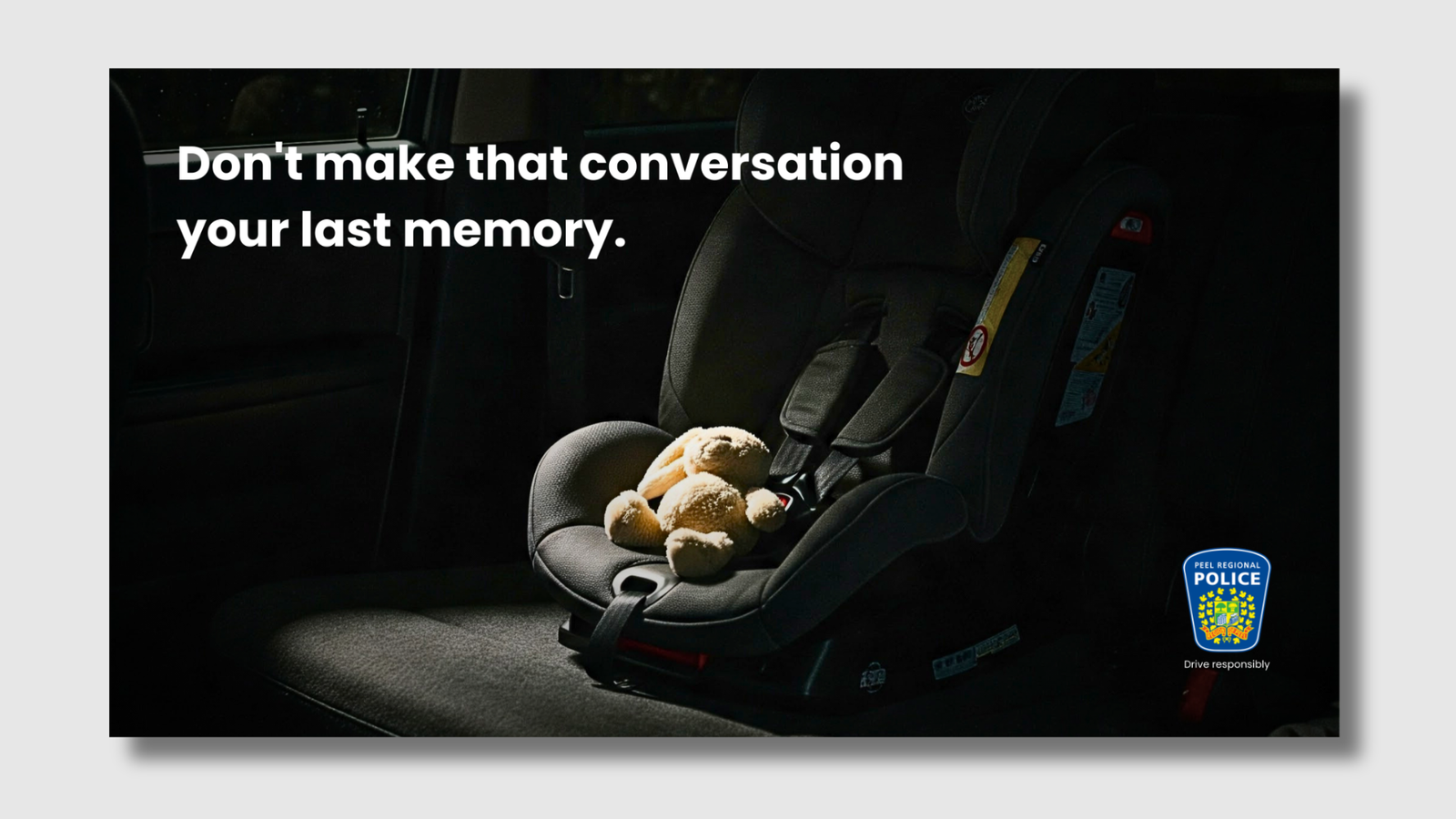
Execution in Action